What Is Hyaluronic Acid?
Hyaluronic acid is a naturally occurring substance found in the skin, connective tissue, and joints. You'll see it listed on ingredient labels as hyaluronic acid or sodium hyaluronate - sodium hyaluronate is the salt form, slightly smaller in molecular size, which is what most skincare formulas use because it penetrates the outer layers of skin more effectively.
What makes it so remarkable is its water-binding capacity. Hyaluronic acid can hold up to 1,000 times its weight in water - which is why even a small amount in a formula can make a significant, immediate difference to how skin feels and looks.

It works as a humectant. Unlike occlusives - which sit on top of skin and slow water loss - humectants work by drawing moisture in. They attract water molecules from the environment and from the deeper layers of skin, pulling hydration toward the surface where it's needed most. The result is skin that feels genuinely softer and fuller, not just coated.
One more thing worth knowing: hyaluronic acid naturally decreases in the skin as we age. Levels start to decline in the mid-twenties, which is part of why skin begins to look less plump and resilient over time. Applying it topically helps replenish what the skin loses - it's not creating an artificial effect, it's restoring something the skin already had.
Who It's For - and Why It Suits Almost Everyone
Hyaluronic acid is one of the few skincare ingredients with no real skin type caveats. Dry skin benefits most visibly - the humectant action delivers immediate softness and plumpness that more occlusive ingredients like butters and oils can't replicate as quickly. But oily and combination skin responds just as well, because dehydrated skin often overproduces oil in compensation, and addressing the underlying dryness can calm that cycle.
Sensitive and reactive skin types can use it without concern. It doesn't contain acids in the active sense, doesn't exfoliate, and has no sensitizing potential. It's consistently well-tolerated by rosacea-prone skin, compromised barriers, and post-procedure skin. It's also safe during pregnancy, which makes it a reliable option when other actives are off the table.
The one thing to keep in mind: hyaluronic acid works better alongside other ingredients than it does on its own. It draws moisture in - but it needs something to seal that moisture in place. That's where ingredients like shea butter, aloe vera, and botanical oils come in. In a well-built formula, they work as a system: the humectant attracts, the emollients and occlusives retain. That layered approach is exactly how Whish formulates - which is why hyaluronic acid appears in products alongside other actives rather than as a standalone star.

Where You'll Find It in the Whish Range
Hyaluronic acid (sodium hyaluronate) runs through Whish's skin care formulas as a hydration base - not as the headline act, but as the ingredient doing the quiet work that makes everything else more effective. You'll find it in serums and targeted treatments across the range, paired with actives like bakuchiol, vitamin C, and botanical extracts that address specific skin concerns alongside the hydration.
The Bakuchiol Vitamin C+E Serum is a good example of how it's used: hyaluronic acid handles deep hydration while bakuchiol and vitamin C work on fine lines, brightness, and antioxidant protection. Skin that's well-hydrated absorbs and responds to actives more effectively - so the HA here isn't just a supporting ingredient, it's what makes the rest of the formula land properly.
That logic carries through across the range. Whether it's in a serum, a treatment, or a targeted formula, hyaluronic acid shows up wherever the skin needs a genuine moisture foundation - not surface softness, but the kind of hydration that keeps skin receptive, plump, and comfortable throughout the day.
Explore the full skin care collection or browse serums to find the right entry point for your routine.
How to Use Hyaluronic Acid Products for Best Results
Apply hyaluronic acid serums and treatments to slightly damp skin - this is the most important application tip, and the one most people skip. Hyaluronic acid is a humectant: it draws moisture toward itself. On damp skin, it has an immediate source of moisture to work with and can bind it to the surface. On completely dry skin, it can pull moisture up from the deeper layers of the skin instead, which can sometimes leave skin feeling drier after the formula absorbs. Damp skin - not soaking wet, just not fully dried - is the right application window.
Layer a moisturizer or face cream on top after applying the serum. The hyaluronic acid draws hydration in; the moisturizer keeps it there. Skipping the second step means you get the immediate softness but less of the lasting effect.

For anti-aging routines, hyaluronic acid pairs exceptionally well with bakuchiol. Bakuchiol supports skin cell turnover and collagen function over time - hyaluronic acid provides the immediate plumping and comfort that makes the skin look and feel better right away. Together, they cover both the short and long game of skin improvement.
For the neck and décolletage, which tend to be drier and more neglected than the face, the Neck Firming Complex is the most efficient way to bring hyaluronic acid to that area as part of a targeted treatment rather than as an afterthought.
All Whish formulas containing hyaluronic acid are free from parabens, sulfates, and phthalates, and are cruelty-free and Leaping Bunny certified. Explore the full skin care collection to see where it fits into a complete routine.
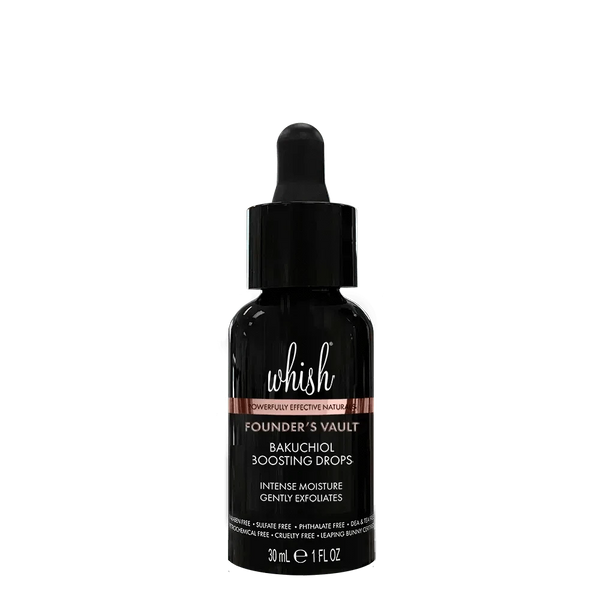
Founder's Vault Bakuchiol Boosting Drops
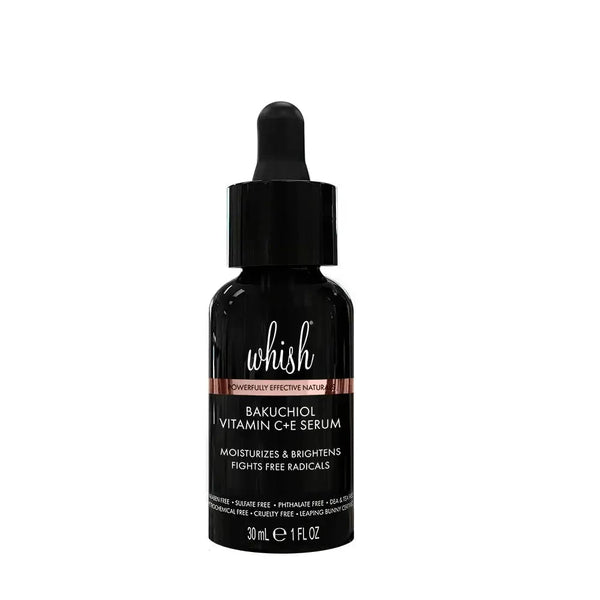
Bakuchiol Vitamin C+E Serum